Tuesday, 26 April 2011

Diving in Bariloche

We have spent 2 1/2 days in Bariloche in the Argentine Lake District. In winter it is one of South America's largest ski resorts but in summer also has plenty to offer. We are here in late autumn so activities are slightly restricted but there is still plenty to do. Again we have been lucky with the weather with bright sunshine and very little wind. A couple we met while walking informed us that 5 days previously the whole town had been under 3 inches of snow and trekking had been impossible. We spent 1 1/2 days walking in the area's national parks, I'll let Nick tell you about that (link to be added). I was surprised to find a couple of dive centres on the lake shore so thought I would give altitude diving a go for the first time - Lake Nahuel Huapi which the town sits beside is about 750m above sea level.

The Aquanautica dive centre was less than a mile from our hostel and the only local centre producing results on Google. It is another SSI centre, I could not find a PADI centre in the area. It is well equipped and friendly but very little English is spoken. Therefore I would only recommend it to experienced divers who don't speak a lot of Spanish. I had sent an enquiring email at very short notice and so did not have a confirmed booking when I showed up but Juan Carlos was ready for me and took me on a dive immediately. It was a shore dive which I was quite happy with given the short notice. The dive site in front of the dive centre is called Neptune Park and I was shown a short video of it before diving. One dive cost £42 including all equipment hire.

The water temperature is 11 degrees Celsius at the moment, a temperature I have never dived in a wetsuit before. However, Aquanautica uses wetsuits from November to May and drysuits only for the rest of the year so wetsuit it was! I was given a Seacsub full length 7mm suit and 5mm hooded shorty to wear on top. I also had 5mm boots and gloves. The equipment looked well maintained and the wetsuits and BCD seemed almost new and a very good fit. I did not have to try on more than one suit.

The dive started with a shallow shore entry and buoyancy check and then the first 5-10 minutes were spent at 5-7m which gave me chance to become familiar with the hired equipment. Almost immediately we descended we saw shoals of trout. They were too shy to get close enough for photos but I could see them clearly. Visibility was excellent, 10-15m and the bottom is sandy so there wasn't much to interrupt the view.


We dived for 45 minutes and I was not at all cold which surprised me. There was plenty of other wildlife to see including crayfish, mussels, crabs, snails and lots of small fish. The crayfish were everywhere, under every piece of wreckage and driftwood on the lake bottom. I used my camera on the automatic underwater mode and got some great shots down to about 20m. After the initial shallow portion of the dive we descended down the steeper slope to around 23m and then came gradually up again. We paused at a 3m wooden statue of the god Neptune at 20m. There were many other objects to explore in the shallower areas from 5m to 10m, from road signs to a wreck to a stove with kettle and 'mate' gourd! I also stroked a wooden trout and played a wooden cello. We finished the dive inside a diving bell at about 5 metres deep. It has an airspace inside where you can take out your regulators for a chat.


While obviously only a training site I enjoyed the dive immensely. Apart from the clarity of the water and depth it reminded me of Wraysbury where I have done most of my freshwater diving. Juan Carlos has an excellent set up for instructing here and it is a shame I am not staying longer in order to dive some of the other sites in the lake. I would highly recommend diving in Bariloche and with Aquanautica.

Thursday, 21 April 2011

Torres Del Paine

Last week we did the 4 day "W" trek in the Torres Del Paine National Park. Nick has written about it in his running blog:

Day 1
Day 2
Day 3
Day 4

Tuesday, 19 April 2011

Ushuaia - Diving at the end of the world

We have spent 3 nights in "Ushuaia - el Fin del Mundo". It lies 54.5 degrees South on the island of Tierra del Fuego in Argentina. It lays claim to the southernmost city in the world  - but many other places (particularly in Chile!) also do. Whatever the actual status it is in a beautiful setting with mountains on 3 sides and the Beagle Channel on the other. The Beagle Channel, named after Charles Darwin's boat, has many islands with colonies of sealions and king cormorants, and lots of giant kelp.


Monday the weather was superb, cold but bright sunshine and no wind. Perfect for a boat trip on the Beagle Channel to see the islands and wildlife. We had a tour on a large catamoran for a couple of hours with the opportunity to disembark on one of the Bridges Islands and walk around. We also stopped to look at two sealion colonies and two king cormorant colonies.


In the afternoon, we went to the end of the world museum which is expensive at £5 entrance but informative and interesting. It has displays on the history of the town from the indigineous peoples to missionaries to the first European settlers and the use of the town as a prison. It also details a few of the many shipwrecks. And there are 95 stuffed birds - at least one example of every bird native to the area. Quite creepy but also stunning to look at birds like a condor up close.

Tuesday I went scuba diving. It's 5 weeks since we left Tobago so I was very much looking forward to getting in the water again. There is only one dive shop in town - Ushuaia Divers - run by Carlos. It's a small SSI dive centre but supplies reasonable equipment inlcuding 5mm neoprene drysuits. The cost is £100 for two dives off a RIB in the Beagle Channel. On our trip there was one other diver who was inexperienced in using a drysuit but things went fairly smoothly underwater. I was hoping for sealions or king crabs but wasn't that lucky. We saw many starfish, a few crayfish, nudibranchs, a interesting squid/jelly like thing that had flashing neon lights down its sides and many shell fish. However, the highlight is swimming amongst the giant kelp and enjoying the light and atmosphere it creates.


The water was 7 degrees today - the coldest I've ever dived in! However, the air temperature is probably colder. Unfortunately, when renting a drysuit you always have the risk that it will leak and flood. The neck and wrist seals on my drysuit were not perfect for me and I had a small trickle from one wrist and the neck and the dump valve as well. I was wearing my own Fourth Element Thermocline top underneath which insulates when wet so it was 30 minutes before I started to feel cold. I lasted 45 minutes and surfacing shivering and unable to take anny of my own gear off :-( brrrrr... I would recommend Waterproof 5mm 3 finger mitts though - it was the first time I'd used mitts and my hands didn't get that cold. Obviously, we couldn't do the second dive as I had a wet undersuit and we needed to get back to the shore so I could warm up. Disappointing but I am still pleased to have dived here - I just wish I had my own drysuit and Arctic thermals!

Carlos was lovely and kept making sure I was OK and not going to get too cold but I would've liked to have had a small discount for missing the second dive. He offered that I could go back tomorrow but as we are leaving I can't. He did waive the £5 port use fee but that is small compared to £100 for one dive! He also gave me a lift back to the hostel and came back later to stamp my log book and deliver a CD with some photos of the dive and a film of the area. This is nice but most of the photos are quite green as he uses a compact camera set on the standard underwater mode rather than setting the white balance manually.

But in summary, I would recommend diving at the end of the world and Ushuaia Divers is safe and friendly.

Walking in Torres Del Paine National Park

See here for details of our walk in Torres Del Paine National Park.

Saturday, 9 April 2011

Perito Moreno Glaciar

It was a cloudy morning when we set out on the 'Alternative' tour of Perito Moreno Glacier near El Calafate. The tour was organised by Patagonian Backpackers, a tour company attached to Hostal Del Glaciars which we were staying in. It is alternative because instead of taking the most direct paved road into the national park it takes a gravel road  giving the opportunity to see much more wildlife along the way. We weren't disappointed as we very soon came across a collection of black breasted buzzard eagles, caracaras and condors feasting on dead hares in the middle of the road.
 

The weather was wet by the time we got to the national park and so we were unable to do the one hour hike on the lake shore we should have done because it was too slippery. Instead we had a good 3 hours on the metal walkways to admire various views of the glacier. Perito Moreno is the 5th largest glacier in Argentina and is also one of fastest moving and most accessible. It is famous for large chunks of ice falling off the front of the glaciar into the lake. We saw several small pieces fall off as we walked along the walkways. Typically, the loudest crashes were heard at points when the path had taken into the trees and thus obscured our view of the glaciar itself!


The highlight of the day was an afternoon boat ride up to the glaciar on the lake. This gives a closer view than the walkways and a real sense of the huge scale of the glaciar. The weather had dried up and the sun was poking through  so we thought the warmer temperatures may mean we would see larger pieces break off. We weren't disappointed. About halfway through the boat trip small pieces started to break off and we heard the rumble and then much larger pieces followed. Amazing! See the pictures for the sense of scale and the size of the pieces hitting the lake.


Wednesday, 6 April 2011

Dragoman ZSB - Buenos Aires to Comorones

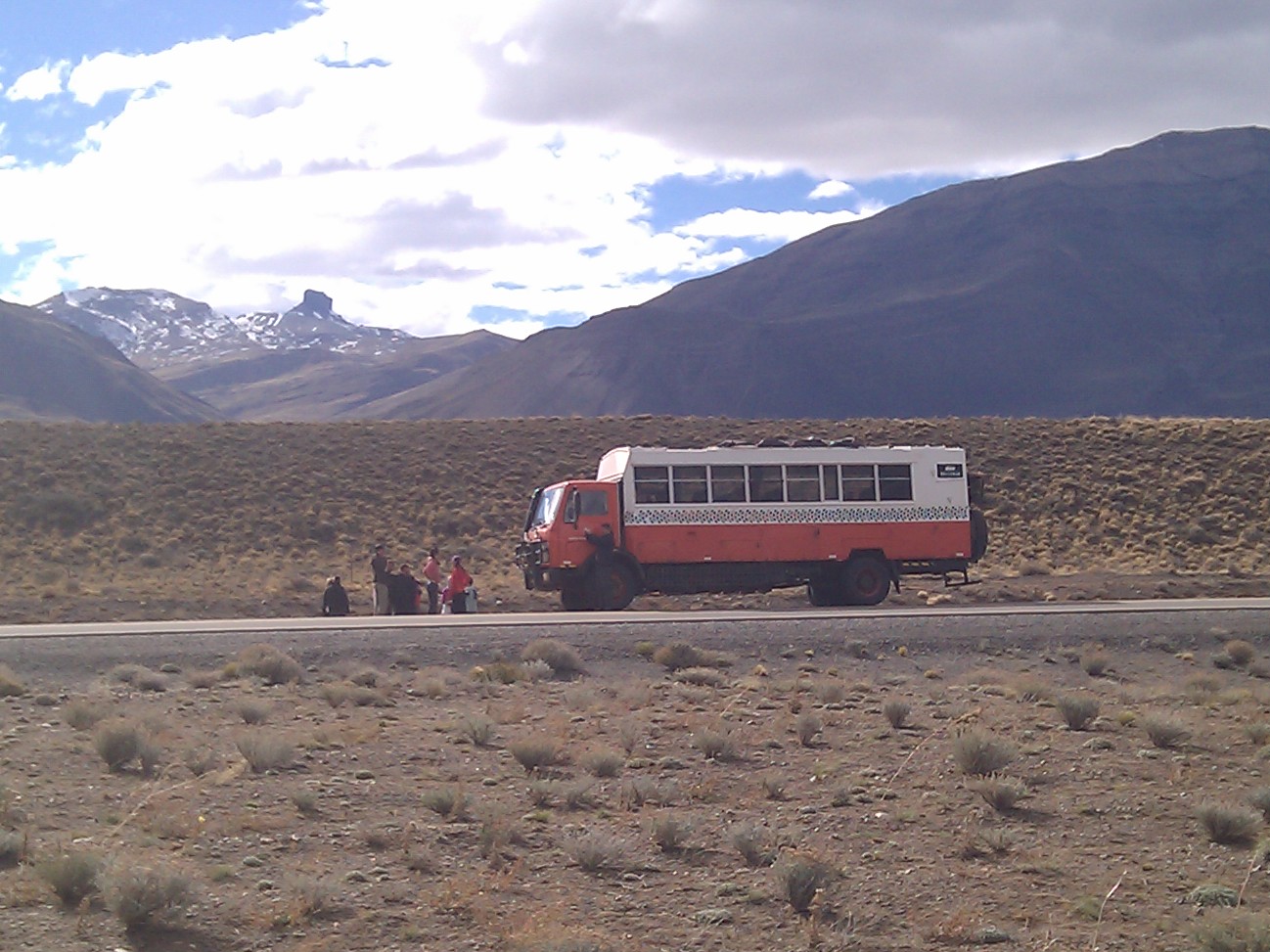
We are now 'overlanding' with Dragoman. It's adventure travel on a converted lorry with space for 20 or so customers and two crew. The truck has lockers for luggage, camping and cooking equipment and is puprose built to travel to remote parts of the world. The tour is 85% camping with hostels/hotels used only in big cities, where it is too cold to camp or when we've been camping for a while and need a break to get sorted again. All the driving is done in the daytime so we have plenty of time to admire the scenery.


Our tour started in Buenos Aires on 28th March and finishes in Santiago on 30th April. It takes in all the main things to see and do in Patagonia and Southern Chile. This blog entry will focus on the first section of about a week or so.

We drove South from Buenos Aires for a couple of days to reach Puerto Madryn. This town is the site of the landing of the first Welsh settlers to Patagonia and the gateway to the Peninsular Valdes national park. This national park is a sanctuary for wildlife, particularly sealion colonies, elephant seals, penguins and armadillos. There are also guanacos (the wild relative of the llama), patagonian hares and lesser rheas. It is most famous as the only place in the world where orcas have developed the hunting habit of swimming right on to the beach to grab a sealion for dinner. Obviously this doesn't happen everyday and when it does it may not be within visual distance of the designated viewpoints. You could come here many times and never see an orca at all. The BBC crew that filmed this behaviour for David Attenborough's Trials of Life series were here for a week to get the footage they wanted. So we were incredibly lucky. We saw 2-3 orcas swimming up and down the coast near the viewpoints and while we were there one did take and sealion from the beach. Unfortunately, I had popped to the loo at the wrong time so didn't actually see it but I did see them cruising which was amazing in itself. They were too far away for a good picture though.


We continued through Patagonia via the Welsh village of Gaiman where we stopped for a Welsh tea (at 11:30 in the morning!). The village seems to exist on its Welshness and the Welsh language is taught in schools to keep it alive. The tea was the first decent cup I've had in Argentina who seem to only make very weak blends. There were also many more cakes than we could eat! It was lovely :-)


Next stop from here was the second biggest Magellan penguin colony in Argentina just south of Camarones. The biggest is a little further North but much more touristy - we had this one to ourselves. The penguins were everywhere covering a huge area from the sea inland quite a way. And they make such a noise! It is moulting season right now and once they finish they will migrate away from the colony for the winter returning to breed in the spring. They mate for life and you see many couples together which is pretty cute.


We camped that night just outside the penguin colony and were slightly delayed leaving the next day because the other group travelling parallel to us had managed to sink their truck nearly 2 feet deep in soft gravel and sand. We stayed to help them dig it out. There was much digging and the collecting of flat rocks to build a firmewr 'road' under the wheels. Eventually a digger was found in the town to come and drag it out. I'll let the pictures do the talking....


From here we travelled south a few hundred km further and spent the night at a couple of campsites along the way. One was on an island in the middle of a river, Isla de Pavon, and although we were the only people there at this time of year it looked like it would be a lovely and busy place in summer. We had a barbecue here and we bowled over by two adorable puppies whose home we camped next to!


We then turned inland and headed for the Andes and El Chalten. Nick has put some details of what we did there on his running blog, Hiking the Viedma glaciar and Trekking in El Chalten

Wednesday, 30 March 2011

Last few days in Buenos Aires

After Iguazu we had a final weekend in Buenos Aires before leaving on Wednesday morning on our Dragoman overland trip through Patagonia to Santiago.

Saturday night we went to the obligatory tango show of which there are hundreds to choose from in BA. Ours was one of the smaller, cheaper ones costing only 200 pesos (some cost 1000 pesos!) We had a one hour tango lesson first in which we learnt the basic steps with varying degrees of success. We both enjoyed it very much. After that a three course dinner was included with unlimited wine which we drank in quite large amounts. The show consisted of 3 couples dancing in different styles through time from the birth of tango to the present day. Unfortunately the mix of wine and overnight bus journey the previous night meant we both kept dropping off throughout the show!!! This says nothing about the show itself which was very good - but more amount the inclusive wine. 


Saturday was also quite a special night in BA - a night of culture. A one off all night cultural festival with music, dance and video performances going on at 50 venues all over the city from 7pm to 7am. It was an amazing atmosphere. We watched a colourful, livey band on one of the street stages playing a eclectic mix of world music on various instruments including a sousaphone.

Sunday we had a quick look at the San Telmo street market again on our way to the Costenera del Sur Nature Reserve. This is a huge wild expanse between the city and the river. It is 8km around the outside and this is what we walked. There were lots of people out but not a lot of wildlife to see unfortunately. The river separates Argentina from Uruguay but is so wide you cannot see the other side. It is also very brown!

Monday we did a guided tour of the Teatro Colon, one of the world's greatest opera houses. It has been refurbished over the last 10 years and was closed last year to finish off the process. The opera season runs from April to December, unfortunately this season's frist night was the day we were due to leave BA. Doubly annoying as the tickets were being given away for free. The tours are done alternately in Spanish and English and last about one hour. We had a big blond (!) Argentinian guide who had spent lots of time in the States and spoke fluent English. He was also very amusing. The tour starts in the very impressive theatre foyer with a history of the theatre. It was built over 20 years from 1888 to 1908 by three different architects and styles, Italian, German and French. It is a very impressive building. The tour also includes the auditorium which seats 2500 with a further 500 spaces for standing. It is huge but the stage area is even bigger - 35 metres square and 48 metres high! We were also shown the view from the president's box which is really impressive. The theatre has the best acoustics in the world for a combination of orchestra and voices and every seat hears the same sound because of the design of the materials used at various levels in the walls. At 60 pesos it's not a cheap way to spend an hour but it is well worth it.


After the theatre we had a introductory Spanish lesson in the hostel we were staying in (the Milhouse Avenue - noisy but comfortable, free wifi and a good front desk to book activities through). The lesson was pretty basic and covered some stuff we already knew but was useful and particularly helped with Argentinian pronounciation, i.e. 'll' is pronouced 'sh' here instead of 'y'.

Monday evening was officially the start of our tour and we had a meeting to be introduced to the rest of the group and get some info. There are 20 people on the tour and two driver/guides. Most people had already been travelling on the truck for a while and there were only 4 of us joining in BA. We went to an Irish pub around the corner for the rest of the evening and got to know people.

Our last day in BA was spent shopping for outdoor clothing and equipment and having a final meal out in the city. Nick said it was the best steak he had ever had and it was huge - 400g. We went to a lovely restaurant called La Posada just off Avenida de Mayo. I had pasta as I was a bit steaked out and that was also fantastic - homemade pasta and sauce and plenty of it. We also couldn't resist dessert which was equally fantastic! A great end to our time in the city.